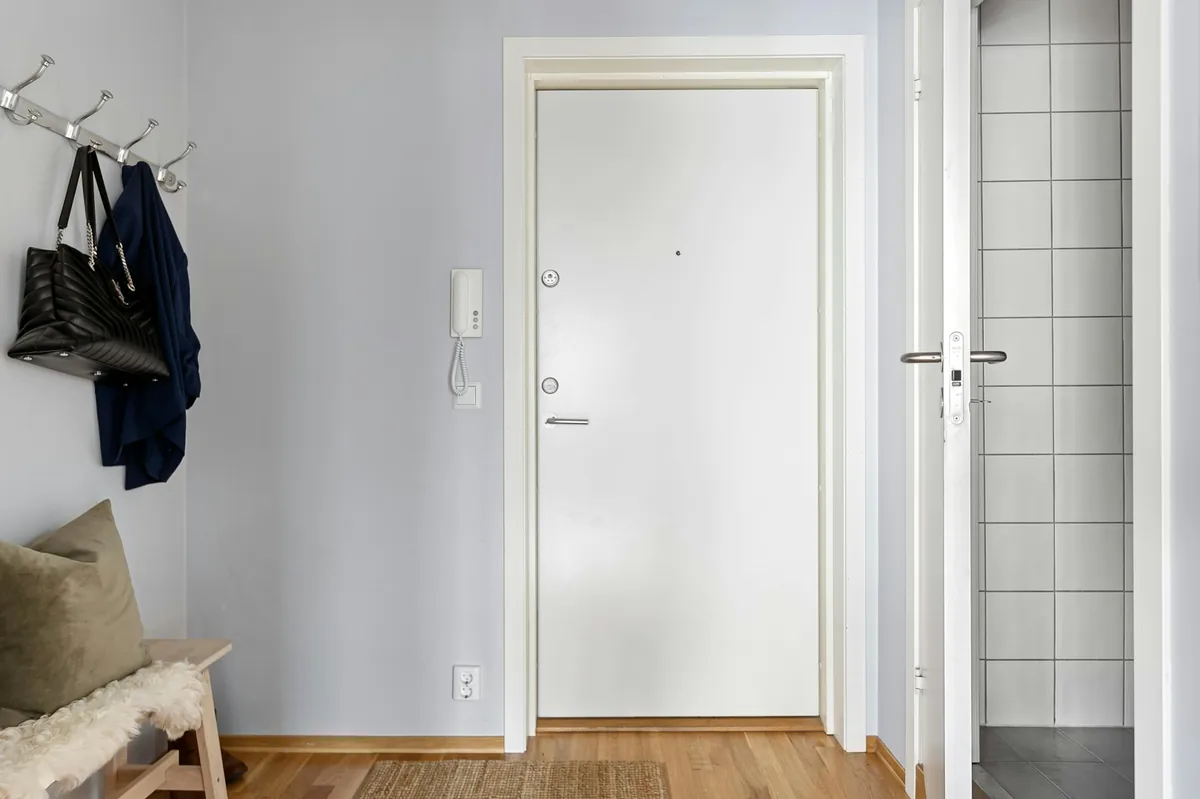
Keys on the counter, a bag on a chair, mail on the nearest table: those piles can show where a household needs a landing place. Start with that pattern instead of choosing a storage system first.
1. Watch where things land
For a few ordinary days, notice what arrives with you and where you put it. Choose one small area close to that route. A section of an existing table or shelf can work; it doesn’t have to be a dedicated entryway.
Keep doors, steps and walkways clear. A storage idea that makes it harder to move through the space is worth changing before you make it permanent.
2. Give each type of item one job
Use a shallow dish for loose everyday items, a suitable spot for a bag and a small place for incoming paper. Begin with containers you already own. Avoid adding so many sections that putting something away becomes a sorting project.
If other people share the area, agree on which parts are shared and which belong to each person. Labels can help when the boundaries aren’t obvious.
3. Separate landing from keeping
A drop zone is a temporary stop, not the final home for every object. Move paperwork that needs attention to the place where you’ll handle it. Return borrowed tools and occasional-use items to their usual storage.
Keep private documents and valuables in an appropriate secure place rather than leaving them visible near an entrance.
4. Adjust after a week
Take a brief look when the area starts to fill. Is the container too small, is the chosen spot inconvenient, or are items waiting for a decision? Solve that specific problem before buying another basket.
A useful system makes the next arrival easier. If everyone keeps choosing a different landing place, move the system closer to the habit instead of insisting on the original plan.